
I’ve been reading Everyday Theology: How to Read Cultural Texts and Interpret Trends for a class I’m in. The main thrust of the book is this: Christians shouldn’t limit exegesis to the biblical text – we should also be proficient in exegeting culture.
Let me put it another way. If I am to love my wife, I must first have some level of understanding of her. If I have no understanding of her at all, how can I express my love to her in a way she’ll understand?
I heard of a missionary overseas once bringing a stork figurine to a native couple who had just delivered their first baby as a gift for the newborn. The missionary was surprised when the native family took great offense at the gift. What was a symbol of new birth to the missionary in the stork was a symbol of death to the natives. The missionary had said without uttering a word, “I hope your new baby dies.” The missionary didn’t understand the culture, and, as a result, his act of love was interpretted as an act of malice by the natives.
The point is this: understanding culture is integral to meaningfully showing love to our neighbors.
In addition to keeping the proverbial foot out of one’s mouth, an understanding of culture will also give you a glimpse into a people’s worldview. If a missionary understands a culture’s worldview, they’ll be better equipped to share the gospel with them in a way they’ll understand.
In the Bible, John’s use of the concept of “the word” or “logos” is a great example of this. The Gospel of John was written to a Greek audience, so John used a concept from Greek philosophy to communicate the message of Jesus to them. John understood the Greeks, and was able to more effectively minister to them as a result.
Paul’s work in Athens recorded in Acts 17 is another great example of a missionary understanding a culture and using that to the Gospel’s advantage. Paul observed the culture of the Athenians, found a way to use it to communicate the Gospel message (ironically, through an idol dedicated to “An Unknown God”), and did so with great effectiveness.
Both John and Paul’s worldview was vastly different from that of their Greek audience, but both understood enough about Greek culture that they could communicate their own worldview in a way the Greeks would understand.
For John and Paul, a good understanding of culture led to effective communication.
John and Paul’s attitude toward the Christian mission are quite a bit different from what my own was in the past. Instead of having a “let me examine your beliefs so I can understand them and better understand you” attitude, I had a “I’m not going to listen to you at all if your beliefs slightly offend me” attitude.

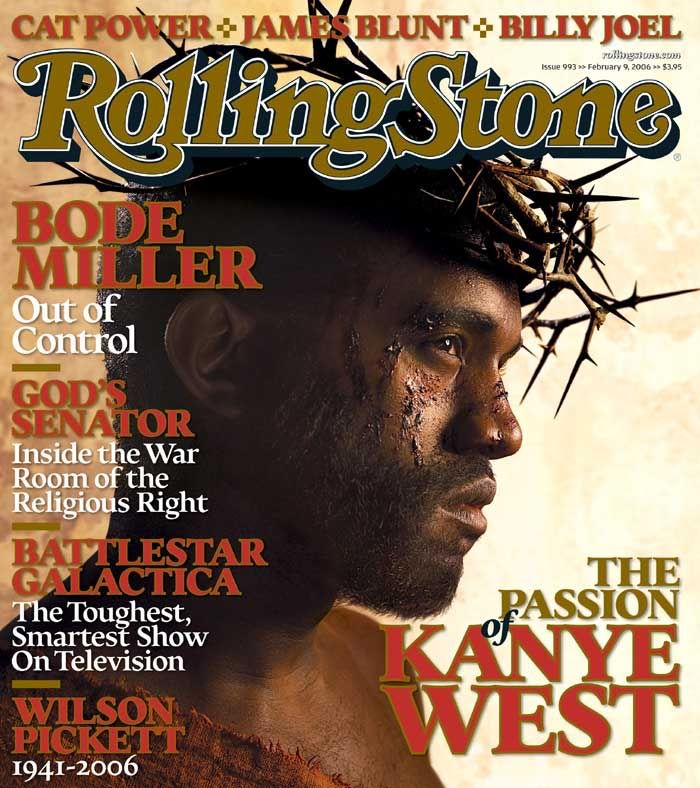
I remember several years ago when Rolling Stone featured a picture of Kanye West with a crown of thorns on his head on the cover of their magazine. The caption read “The Passion of Kanye West.” I saw that and it didn’t take me five minutes to email everyone I knew telling them they should boycott Rolling Stone. Now, did I even read the article? No. But I called Rolling Stone’s customer service department to inform them I wouldn’t be reading their magazine anymore. Was I a subscriber to Rolling Stone? No. Was I even a casual reader of Rolling Stone? No – never have been. Even when I was working in radio I didn’t read Rolling Stone – I always preferred Spin. But I went out of my way to inform them I wouldn’t be reading their magazine, and I made sure to let them know why too – because I was a Christian! Kind of funny now (and sad).
Anyway, here’s the point: I saw something offensive, and instead of listening I reacted with a call to boycott even going out of my way to express my displeasure to a nice lady in their customer service department. I’m not saying I necessarily embrace the depiction of Kanye West in a crown of thorns or of his “suffering” in the music industry having any relation to Jesus’ suffering on the cross, but my first reaction shouldn’t have been what it was. My attitude and actions were counterproductive to the Christian mission, and I imagine John and Paul would have rolled their eyes at me. I’ll bet the customer service lady I talked to on the phone did.
I know the Greeks’ outlook on life and living was offensive to John and Paul’s Christian worldview. I can only imagine how Paul felt as he walked through Athens in the midst of all those idols – in fact, the Bible says he was greatly distressed because of what he saw. But Paul didn’t call all his Christian friends together and tell them to boycott Athens. He observed and listened, then he reached out respectfully and in love.
Fast forward to the present: I’m in San Francisco – one of the most liberal cities in the world. What should Christians do when they encounter something offensive to their worldview here (which happens, like, everyday)? Boycott? Protest? Scream? Picket the steps of City Hall? Or should we observe, listen, and then reach out respectfully and in love?
I vote for the latter.
If anything needs to be boycotted today, it’s the attitude that leads to boycotting being your first move. Please, boycott that immediately and email all your friends encouraging them to do the same.
Less boycotting, more listening and observing. From listening and observing comes the ability to show love meaningfully and communicate effectively – two things integral to the Christian mission.

 The Overflow